
The humble maglock. So often overlooked or dismissed as “just a maglock”. But what is an access control system without a robust and effective lock? These core components are essential to smooth and safe building management. And quality matters. For the highest levels of safety and security, especially during emergencies, your choice of maglock is vital.
What are maglocks and how do they work?
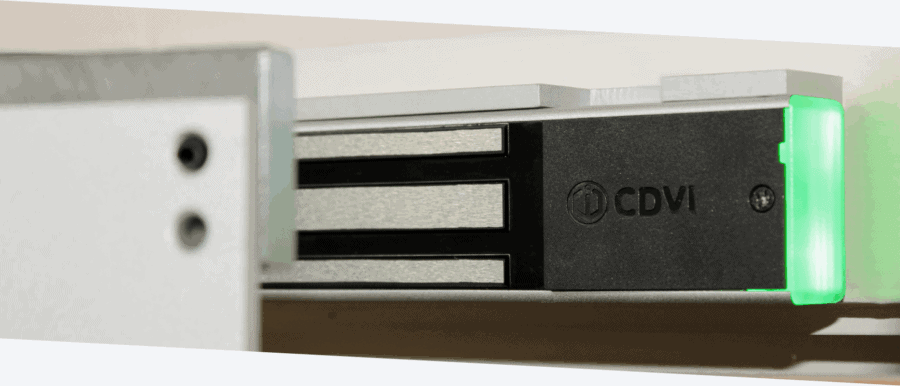
Maglocks consist of an electro-magnet fixed to the door frame, and an armature plate fixed to the door leaf. To lock the door, electrical current is run through the magnet, generating a strong magnetic field. The force of attraction between the magnet and the armature plate is what holds the door firmly closed and locked.
Benefits of maglocks
Maglocks are low maintenance locking solutions. They have no moving parts, so they don’t suffer wear-and-tear the way other kinds of locks can. And that means a more durable solution and fewer maintenance issues. In addition, this simplicity means they’re straightforward and inexpensive to install.
Electro-magnetic locks are also much more versatile than some other locks. With the right brackets, they’ll fit to both single or double doors, doors made of plastic, wood, or glass, swinging or sliding doors. They’re everywhere: schools, hospitals, offices, government premises, and more.
Maglocks in emergency situations
Let’s look at two key emergency situations that every building should prepare for: fire alarms and power outages. Maglocks are ideal for emergency exits in these scenarios as they’re fail safe. They require power in order to stay locked. As soon as the power supply to the magnet drops, the magnetic field instantly drops, too – leaving the door free to open. In a power outage emergency, all doors secured with maglocks would immediately unlock, leaving safe exit routes for any building occupants.
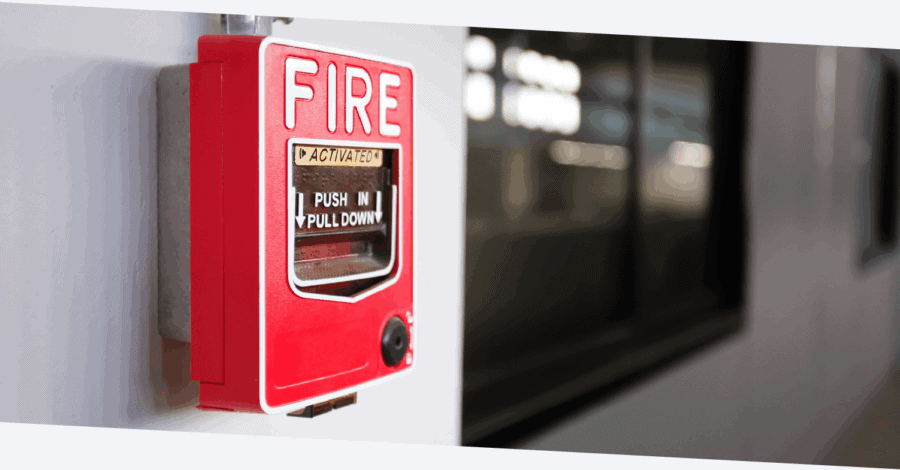
Fire alarm situations are a little different: they require a signal sent from the fire alarm system to trigger the relevant magnets to unlock. Usually, this goes via an access control system like ATRIUM. The fire alarm signal transfers to the ACU via its fire input, and the ACU then instantly signals to the relevant maglocks to cut their power and therefore unlock the doors.
All building managers, when planning for emergency preparedness, must make choices between safety and security. Where a maglock is ideal for an emergency exit, it’s not suitable for a door that secures high-value assets or private data. If your bank vault instantly unlocks for anyone to enter every time there’s a power cut, you’ll soon have some serious issues!
Compliance with fire and safety regulations
There are a number of regulations that installers of maglocks should be aware of. These regulations define strict rules to maximise safety and ensure that building occupants can always exit safely and efficiently in an emergency.
BS EN 13637
This British and European standard covers devices fitted to escape doors secured with electronic locking. It’s currently a non-harmonised standard in the UK, meaning it is technically voluntary and cannot be referenced for CE or UKCA marking. However, bear in mind that EN13637 is mandatory in the Republic of Ireland.
EN13637 states that all the devices that work together to secure an escape door have to be tested together. To pass the tests, the combination of solutions must release the door in a single actuation within 100 milliseconds. The lock must also have at least 100kg sideload release to be compliant.
For more information about EN13637, read our simple guide.
BS7273-4
This British regulation handles integrations between fire detection systems and door release mechanisms. It defines how doors secured electrically, including with electro-magnetic locks, should respond to a fire alarm incident. Fundamentally, the regulations express that locks should release quickly and reliably, so that any building occupants can safely escape.
The Regulatory Reform (Fire Safety) Order 2005
This UK legislation places a mandatory duty of care on building owners and managers to ensure that any people inside the building can evacuate safely in an emergency. It details how escape routes and exits should be maintained and kept clear at all times. In addition, the law states that any security measures (including maglocks) don’t compromise evacuation in an emergency.
Best practices for installing maglocks in emergency-compliant systems
With some planning and preparation, installing compliant maglock systems isn’t difficult. Here are a few simple things to consider for your next project.
Emergency break glass units
Break glass units give building occupants the ability to manually override a maglock in an emergency. When the user depresses the glass, the unit instantly sends a signal to cut the power to the maglock and therefore open the door. It’s immediate and easy to use, and doesn’t rely on any other components to respond in a crisis. And today, you can even choose resettable versions which don’t need the glass plate replacing every time they’re used.
Visual indication and door monitoring
Maglocks that give clear visual feedback to users are safer – for example, the V3SR includes an LED endcap that’s clear from a distance even in low visibility conditions. Exit buttons or override switches should follow the same principle – easy to see in low-light or smoke, and clearly labelled.
Door position switches like the DPM-300 detect whether the door is open or closed, and feed that data back to a centralised access system. Going a step further, monitored maglocks like the V3SR help identify whether a door has been forced open or if a lock has failed to operate as expected. These features give site managers better visibility and the ability to respond quickly and efficiently to any incidents.
Risk assessments and regular testing
Compliance isn’t just for Christmas – it’s a responsibility forever. It should be reviewed, maintained, and updated regularly to ensure optimal safety at all times. Site managers should carry out risk assessments regularly to evaluate the effectiveness and safety of escape routes. With the implementation of Martyn’s Law in the UK, this is even more important than ever to avoid severe penalties.
In addition, all the components of a security and alarm system should be tested in line with manufacturer recommendations regularly. Pay particular attention to integrations to ensure smooth and effective operation. Any delays can have extremely serious consequences in a crisis, and regular testing helps to identify and mitigate these in a safe environment.
Conclusion
Maglocks are secure and safe electronic locking solutions, but only when they’re installed and operated in a correct and compliant manner. As an installer or building manager, your job is to pay close attention to your site and assess risks thoroughly so that the balance between security and emergency safety can be struck appropriately.
At CDVI, we know maglocks. With more than 40 years of heritage in access control, our solutions have been refined and optimised over decades. When you choose CDVI maglocks, you’re choosing experience, excellence, and expertise.
For advice or support with your next maglock project, speak to CDVI’s Technical Support team. Or if you’re just starting out, try the CDVI Academy Intro to Access Control course for a comprehensive introduction to electronic locking!