
“Accessibility” – when you hear it, do you think of ramps, elevators, and automatic doors? You’re not alone! But real accessibility is about much more than just physical access. Communication is a core factor that is often overlooked. People who live with impaired hearing or sight may find that entrances to buildings create unexpected challenges.
This is true not just of residential homes but also businesses, schools, health facilities, and public buildings. Everyone, including those with sensory disabilities, needs to be able to communicate effectively with the people inside. Access control and electronic locking are there to enhance security, but this should not be at the cost of inadvertently excluding people.
This is where video intercom systems come in and solve a whole heap of challenges. They’re easy to operate, make communication simple, and deliver a secure and accessible entrance solution for everyone.
First of all, let’s clear up the basics:
What is an intercom system for?
It’s common for people to see intercoms as a basic tool for unlocking doors or gates remotely. But in practice, there’s more to it. An intercom enables residents, employees, or staff inside a building identify who is outside and why they want to come in, then made an informed decision about whether to grant entry.
Intercoms are a crucial part of a building’s wider security infrastructure.
In the past, intercoms have generally been audio-only solutions. Visitors ring the bell, speak to someone inside, and entry is either granted or denied. That might work in some cases, but for modern, accessible buildings, we need a little more.
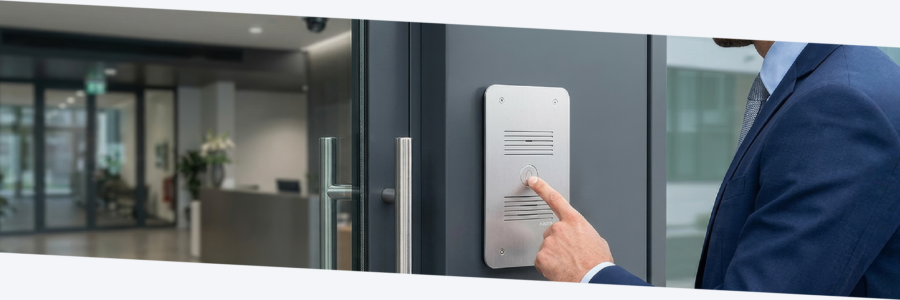
When is audio not enough?
Traditional audio intercoms give you only half of the story. You’ll hear and speak to someone, but with nothing visual to build a full picture of who they are.
How could you really confirm that the visitor is the contractor you booked, a legitimate courier, or a visitor you’re expecting?
Now imagine you live with hearing impairments. The challenge of reliably identifying the visitor is now significantly harder. Communicating with them is difficult in any situation, let alone with disruptive background noise.
Video adds a vital visual layer to intercom systems. When you can both see and hear a visitor, you have more information and more ways to communicate in order to make an informed decision about granting them entry.
5 Ways Video Intercoms Improve Accessibility and Security
1. Easier visitor identification
Being able to see the person at the door means you don’t need to rely only on verbal communication that can be misheard or unheard. By adding video, you’re reducing the risk of misunderstandings at the entrance.
Whether it’s a relative arriving for a visit at a care home, a delivery driver dropping off a package at your office, or a contractor ready to work on your home, video intercoms make it easier to positively identify visitors.
2. Calls can be answered on a mobile phone or tablet
For wheelchair users or other people with limited physical mobility, being able to see and speak to visitors, as well as unlock a door remotely, is a huge benefit to everyday life. There’s no pressure to rush to a fixed indoor monitor or get yourself to the front door to open it – just a quick tap on your phone or tablet and it’s done for you.
This functionality also benefits environments such as offices, schools, and care facilities, where staff are unlikely to be stationed at the front door all the time.
3. Better support for hearing-impaired people
Traditional audio-only intercoms can be a real challenge for deaf and hearing-impaired individuals. But add the video layer (especially 2-way video), and suddenly those who lip-read or use sign language are able to communicate more effectively.
Your entrance is now more accessible and welcoming to a wider range of people.

4. Increased peace of mind for elderly and vulnerable people
For elderly people or more vulnerable people, opening the front door can be an anxious experience. If they can see and speak to visitors before granting them entry, they feel more in control of the situation and reduces worries about unfamiliar people.
This is equally true of care environments like hospitals, retirement homes, and schools, where it’s essential that staff only grant access to legitimate and authorised visitors.
5. Easier access management for everyone
Whether you’re an employee, a frequent visitor to a building, or a one-time contractor, video intercom systems make entrances smoother. It’s easier to identify visitors and grant access based on more complete information. That means it’s quicker, less risky, and less confusing for everybody.
The result is an entrance experience for staff, residents, patients, and visitors alike that’s safer and more accessible.
Making entrances safer and simpler for everyone
Accessibility isn’t only about getting people physically through the door. Truly accommodating people’s needs means making communication at the entrance simple, secure, and clear.
Video intercom solutions break down the barriers of traditional audio systems and open up their usage to a wider audience. They ensure residents, staff, and visitors in a whole range of buildings can see, speak, and make decisions with as much information as possible. For modern buildings prioritising true accessibility, video intercoms make entrances work for everyone.